
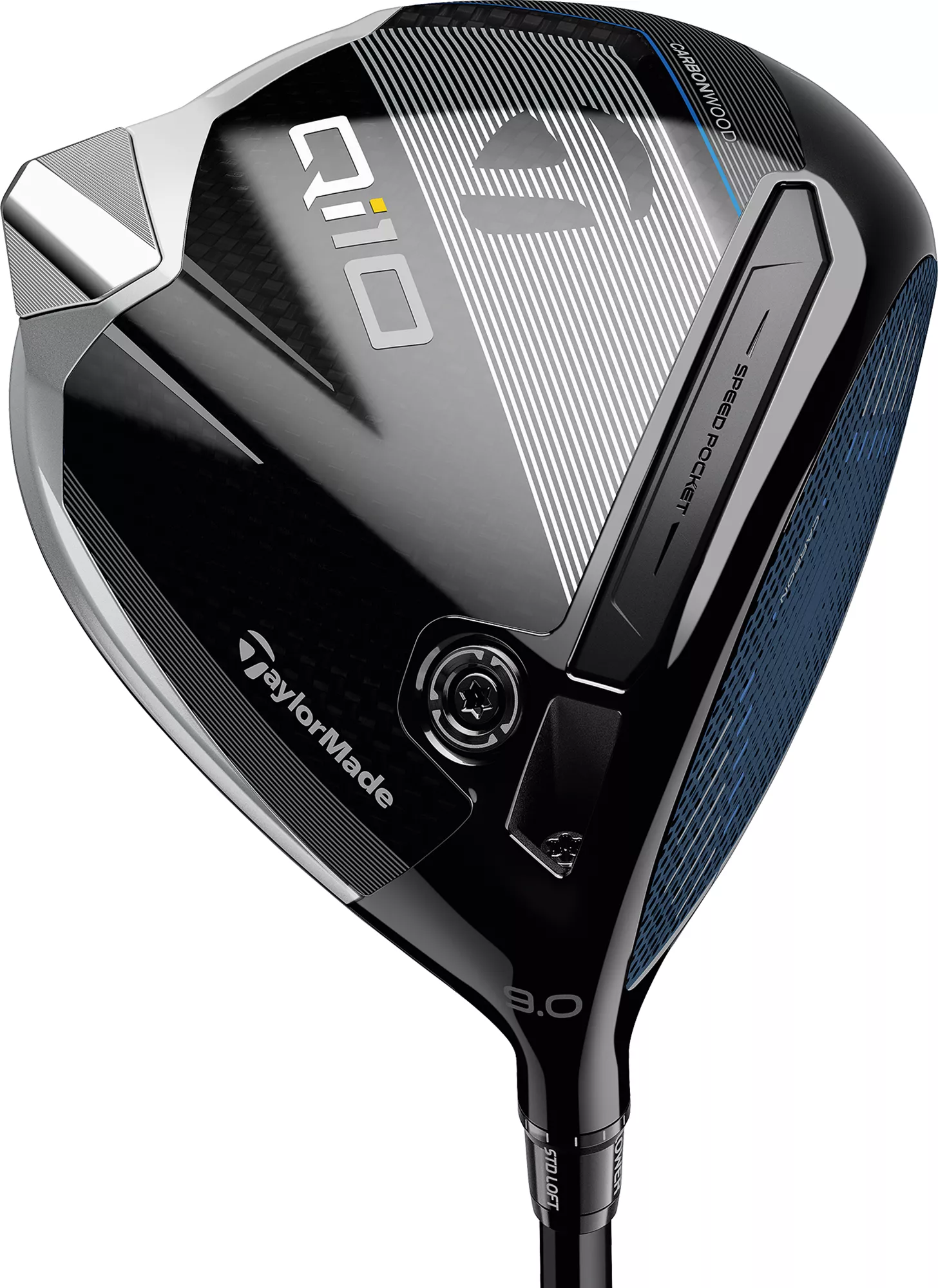
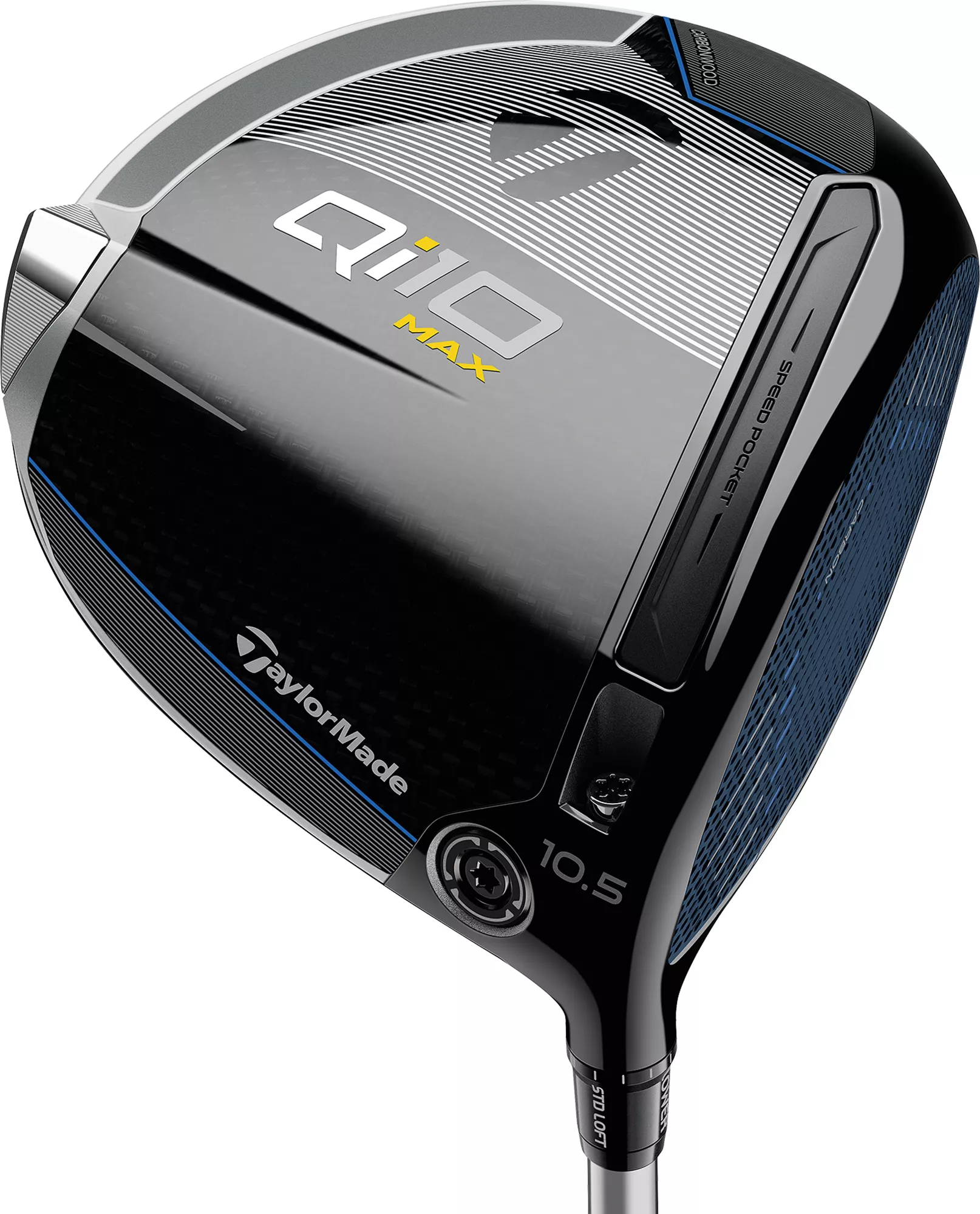
- +Your handicap is below 10 and you make consistent center contact
- +You occasionally shape shots left or right on purpose
- +Your swing speed is above 100 mph and you want lower spin
- +You prefer a more neutral ball flight with less launch
- +You want maximum feedback from off-center hits
- +Your handicap is 10 or above
- +You frequently miss the heel or toe
- +Your swing speed is 75–95 mph and you want maximum carry
- +You play a consistent stock shot and don't need to work the ball
- +More fairways is your primary goal off the tee
This is a fitting decision, not a performance ranking: The Qi10 Max is not the "better" driver — it is the higher-forgiveness driver. The standard Qi10 is not inferior — it suits a different swing profile. Both use the same Twist Face, the same hosel, and sell at the same price. Choose based on your handicap and miss pattern, not the word "Max."
Specs at a Glance
| Spec | Qi10 | Qi10 Max |
|---|---|---|
| Head Size | 460cc | 460cc |
| Face Tech | Twist Face | Twist Face |
| CG Position | Neutral | Rear/High (max MOI) |
| MOI | High | Very High |
| Launch | Mid | Mid-High |
| Spin | Mid | Mid-High |
| Forgiveness | High | Very High |
| Workability | Moderate | Low |
| Hosel | 24-way adjustable | 24-way adjustable |
| Price (2026) | ~$299–399 (sale) | ~$299–399 (sale) |
Head to Head
Forgiveness
Edge: Qi10 MaxQi10
The standard Qi10 has a high MOI — well above average for a 460cc driver — but it is not the highest in the lineup. Its CG sits in a more neutral position, which produces good forgiveness on mishits while retaining enough face rotation to allow shot shaping. On heel and toe strikes, the Qi10 holds its line well, but you will notice a modest drop in ball speed and distance compared to a center strike. For a consistent ball-striker with a handicap below 12, this is not a limiting factor.
Qi10 Max
The Qi10 Max has the highest MOI in the Qi10 lineup. TaylorMade achieved this by moving the CG further back and toward the perimeter, resisting face rotation on off-center contact. On the same heel or toe strike that costs the standard Qi10 a few mph of ball speed, the Max gives it back. The real-world effect: tighter dispersion, more consistent carry distances, and fewer blow-up drives. For handicaps 10 and above, the Max's forgiveness advantage is one of the clearest fitting calls in TaylorMade's lineup.
Distance
Edge: Qi10 (center contact) · Qi10 Max (full-round consistency)Qi10
On center strikes, the standard Qi10 and Qi10 Max produce nearly identical ball speeds — the face technology is identical, and CG position has minimal impact on pure center contact. Where the Qi10 has a subtle edge is spin: its neutral CG produces slightly less driver spin than the Max, which for faster swingers above 100 mph can translate to a more penetrating, distance-efficient flight. If you compress the ball consistently, the standard Qi10 will match or beat the Max on distance.
Qi10 Max
The Qi10 Max's distance advantage shows up in the aggregate — not on pure center strikes, but over a full round of 14 drives where some will catch the heel or toe. Higher MOI means those mishits retain more ball speed and carry farther. On the launch monitor hitting 10 drives each, the Qi10 Max produces a tighter distance range: fewer outliers, more drives in the 240–260 yard window. For the average recreational golfer, total distance over 18 holes often favors the Max.
Workability and Shot Shape
Edge: Qi10 (shot shaping) · Qi10 Max (straight, consistent flight)Qi10
The standard Qi10's neutral CG allows the face to rotate through impact more freely, making it easier to intentionally shape a draw or fade. Players who occasionally need to work the ball around a dogleg or flight it lower into the wind will find the Qi10 more responsive to swing path adjustments. This is not a blade — it is still a forgiving 460cc driver — but it gives skilled players more feedback and shape control than the Max.
Qi10 Max
The Qi10 Max's higher MOI works against workability by design. The same rear/perimeter CG that stabilizes the face on mishits also reduces its willingness to rotate for intentional shaping. You can still hit a draw or fade with the Max, but it requires more deliberate swing changes to produce the same curve as the standard Qi10. For players who play a consistent stock shot and don't need to shape the ball, this is not a drawback — it is exactly what you want.
Launch and Spin
Edge: Qi10 (faster swingers, low spin) · Qi10 Max (75–95 mph, max carry)Qi10
The standard Qi10 launches at a mid trajectory with mid spin — a flight profile that suits 85–105 mph players who generate sufficient spin on their own and want a penetrating, efficient ball flight. In calm conditions this produces good carry and roll. In wind, the lower, more boring trajectory holds up well. If you are a faster swinger who already generates high spin, the standard Qi10's neutral CG helps keep spin in check.
Qi10 Max
The Qi10 Max launches slightly higher with marginally more spin than the standard Qi10. For moderate swing speeds of 75–95 mph, this is actually an advantage — higher launch and a touch more spin produces more carry for players who struggle to get the ball airborne. For faster swingers above 100 mph who already fight high spin, the Max's launch profile can produce a balloon flight in certain conditions. In that case the Qi10 LS is a better fit than the standard Qi10.
Who Each Driver Is For
Edge: Qi10 (sub-10 handicap, consistent striker) · Qi10 Max (10+ handicap, max forgiveness)Qi10
The standard Qi10 suits the 80–105 mph golfer who makes consistent contact, has a handicap below 12, and occasionally shapes shots on purpose. It also suits faster swingers who are already well-fitted and want the Qi10's proven Twist Face without the extra spin the Max introduces. If you are an ex-single-digit who still plays to a 10–14, the standard Qi10 is a flattering choice — it rewards when you're on and doesn't punish you when you're not.
Qi10 Max
The Qi10 Max is the right call for handicaps 10 and above, for golfers who miss the heel or toe with any regularity, and for moderate swing speeds of 75–95 mph who want maximum carry. It is also the correct choice for any golfer whose primary goal is more fairways — the Max's higher MOI produces tighter left-to-right dispersion on mishits. Most recreational golfers who walk into a fitting with no strong preference should be pointed toward the Max.
The Full Qi10 Lineup
Four variants, one generation. If neither the standard Qi10 nor the Max feels right, there may be a better fit in the lineup.
Qi10
Neutral · Workable
Standard model. Neutral CG, moderate forgiveness, best for consistent ball-strikers below 12 handicap who occasionally shape shots.
Qi10 Max
Max Forgiveness
Highest MOI in the lineup. Rear/perimeter CG, tightest dispersion, best for 10+ handicaps or anyone who prioritizes consistency over workability.
Qi10 LS
Low Spin · 100+ mph
Forward CG for minimum spin. Built for swing speeds above 100 mph who need a flatter, more penetrating flight and fight excess spin.
Qi10 Max D
Draw Bias
Max head with adjusted internal weighting toward the heel. Significant draw correction for golfers who fight a fade or slice.
Where to Buy
Frequently Asked Questions
What is the difference between the TaylorMade Qi10 and Qi10 Max?
The main difference is MOI and CG position. The Qi10 Max has a higher MOI achieved by moving the CG further back and toward the perimeter — this maximizes forgiveness on off-center hits. The standard Qi10 uses a neutral CG, produces slightly less spin, and allows more shot-shaping. Both use Twist Face and sell at the same price. The choice is a fitting decision based on your handicap and miss pattern.
Should I buy the Qi10 or the Qi10 Max?
For most recreational golfers (handicap 10 and above), the Qi10 Max is the right call — its higher MOI produces more consistent distance and tighter dispersion on mishits. For single-digit handicappers who make consistent center contact and occasionally shape shots, the standard Qi10 suits better. If you're unsure, lean toward the Max: the forgiveness benefit is real and the cost is identical.
Is the Qi10 Max more forgiving than the Qi10?
Yes — meaningfully so. The Qi10 Max has a higher MOI than the standard Qi10, which reduces the distance and directional penalty on heel and toe mishits. For a golfer who frequently misses the center of the face, the Max produces tighter dispersion and more consistent carry distances. For a consistent center-face striker, the forgiveness gap is less relevant.
What swing speed is the Qi10 Max designed for?
The Qi10 Max suits a wide range — roughly 75 to 105 mph. Its mid-high launch and higher spin profile benefit moderate swing speeds (75–95 mph) who need carry. Faster swingers above 100 mph who already generate plenty of spin may find the Max launches too high; the standard Qi10 or Qi10 LS is a better fit at that speed.
What are all the TaylorMade Qi10 variants?
The Qi10 lineup has four variants: the standard Qi10 (neutral CG, workable, sub-10 handicap), Qi10 Max (max MOI, highest forgiveness, 10+ handicap), Qi10 LS (forward CG, low spin, designed for 100+ mph swingers), and Qi10 Max D (draw-bias version of the Max for golfers who fight a fade or slice). All four use the same Twist Face and 24-way adjustable hosel.