
- +You want maximum MOI and the best used price under $300
- +You want a set-and-forget forgiveness driver without adjustments
- +Your swing speed is 75–100 mph and you want pure high launch
- +You want TaylorMade's proven Carbon Twist Face technology
- +Saving $50 over the Paradym matters to your budget
- +You want adjustable weight to tune launch and spin
- +You want Callaway's AI-optimized face ball speed
- +Your swing speed is 85–110 mph and you want more versatility
- +You want a used driver with fitting flexibility
- +The $50 premium over the Qi10 Max fits your budget
Specs Comparison
| Spec | Qi10 Max | Paradym AI Smoke Max |
|---|---|---|
| Head Size | 460cc | 460cc |
| Construction | 60X Carbon Twist Face | Triaxial Carbon crown + titanium |
| Key Technology | InertiaGenerator (60g rear) | AI Jailbreak Speed Frame |
| Adjustable Weight | None (fixed 60g rear) | Up to 23g Tungsten Speed Cartridge |
| Launch | High | Mid-High |
| Spin | Mid | Low-Mid |
| Hosel | OptiFit (12 positions) | SureFit-style adjustable |
| Stock Shaft | HZRDUS Black 4G 60 | Project X HZRDUS Smoke iM10 |
| Loft Options | 9°, 10.5°, 12° | 9°, 10.5°, 12° |
| Used Price | ~$275 used | ~$325 used |
Head to Head
Forgiveness
Edge: Qi10 Max (measured MOI); Paradym (face ball speed on mishits)Qi10 Max
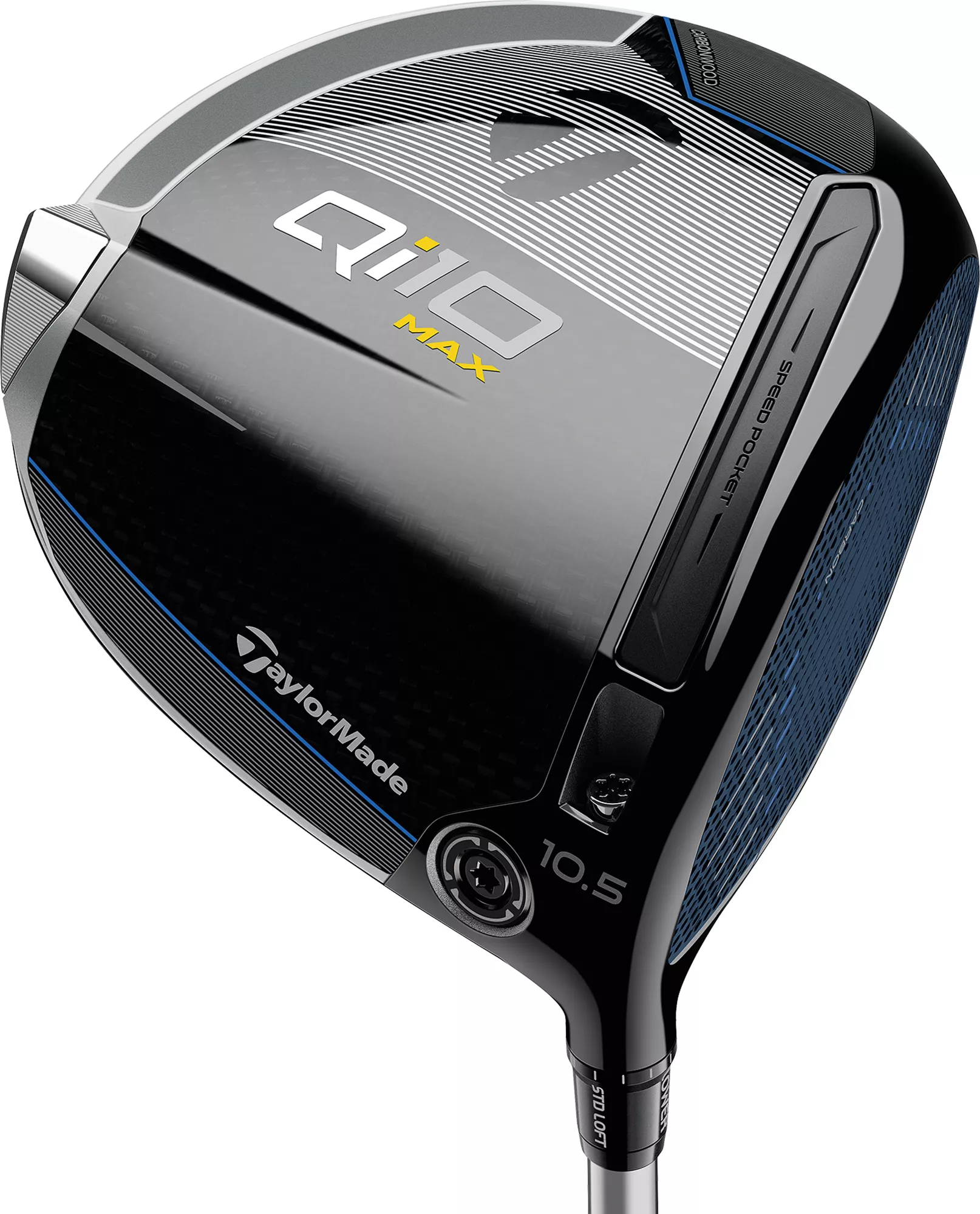
The Qi10 Max was built around one central idea: the heaviest possible fixed rear weight produces the highest possible MOI. The 60g InertiaGenerator — the heaviest rear weight TaylorMade had produced at the time — pushes the CG deep and back, maximizing resistance to face twisting on mishits. In MOI testing, the Qi10 Max ranked among the most forgiving drivers of its generation. On the worst off-center strikes, it loses less ball speed and produces a straighter flight than most competitors.
Paradym AI Smoke Max
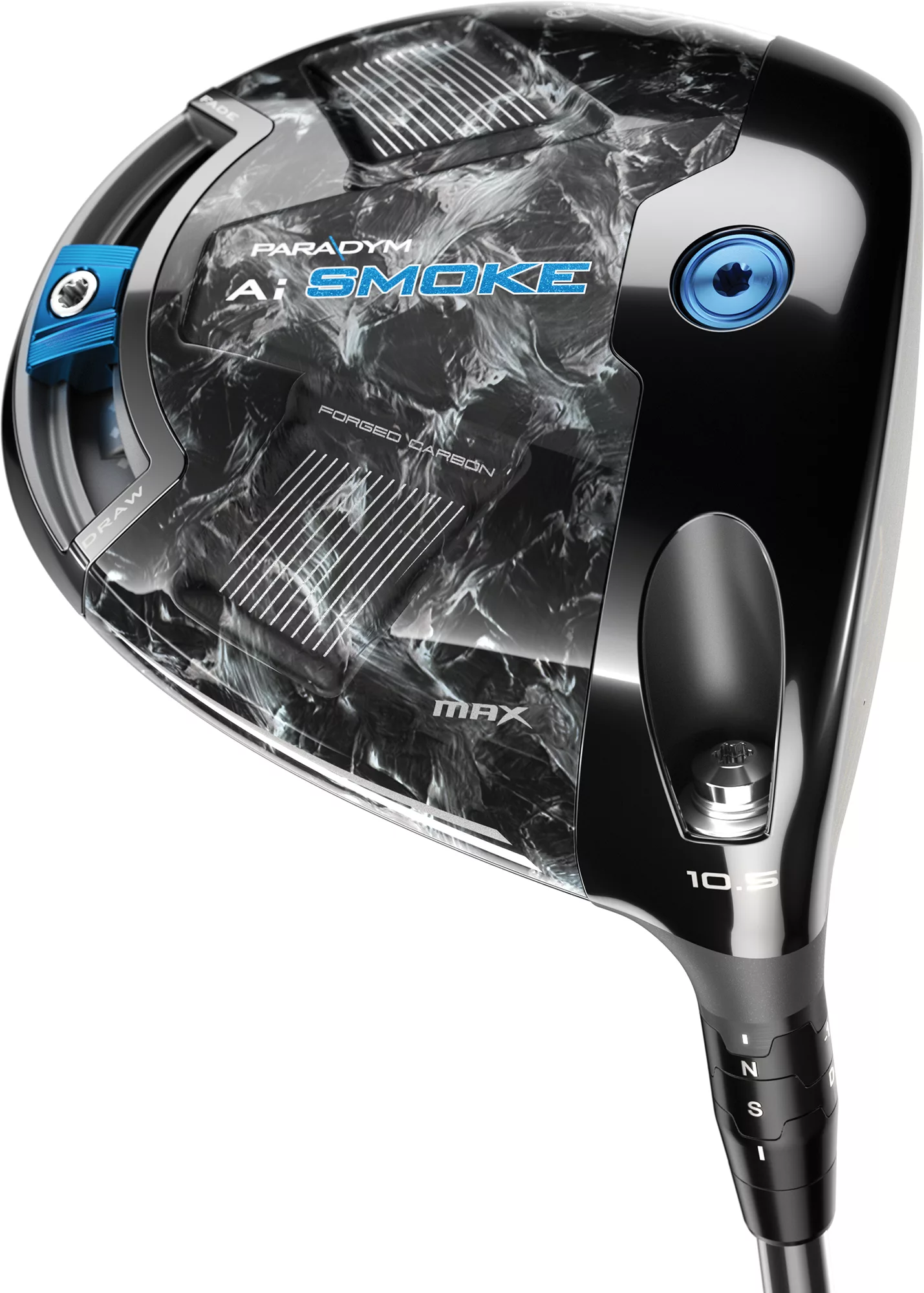
The Paradym AI Smoke Max achieves its forgiveness through AI-designed geometry rather than raw rear weight. The AI Jailbreak Speed Frame was optimized by analyzing millions of impact data points to maintain ball speed across a larger area of the face. The Triaxial Carbon crown removes weight from the top of the head and allows it to be repositioned for a lower, more stable CG. The result is a driver that feels and performs like a high-MOI head without relying solely on a heavy rear weight.
Ball Speed
Edge: Paradym AI Smoke (face-wide ball speed)Qi10 Max
The 60X Carbon Twist Face on the Qi10 Max is a carbon fiber face, lighter than titanium at equivalent thickness — which allows TaylorMade to make it thinner and more flexible, producing higher ball speeds at impact. The Carbon Twist Face technology, which twists the face at contact to compensate for off-center strikes, produces competitive ball speeds across the face. At center contact, the Qi10 Max is excellent. Off-center, the twist mechanics help preserve more speed than a conventional titanium face.
Paradym AI Smoke Max
The AI Jailbreak Speed Frame's internal architecture was generated by artificial intelligence to maximize the stiffness-to-weight ratio in the areas that most affect ball speed. Callaway's AI design produces a face that works efficiently across more of the impact area — in testing, the Paradym AI Smoke Max produces strong ball speeds even on heel and toe hits. Its face-wide ball speed retention is one of its most frequently cited performance strengths.
Adjustability
Edge: Paradym AI SmokeQi10 Max
The Qi10 Max has no movable weight — the 60g InertiaGenerator is fixed. TaylorMade's philosophy for the Max model was to commit the maximum weight possible to the rear position and leave it there. The OptiFit hosel provides 12 positions of loft and face angle adjustment, covering the standard fitting variables. But if you want to change the spin or launch profile by moving CG position, the Qi10 Max cannot do it.
Paradym AI Smoke Max
The Paradym AI Smoke Max has an adjustable Tungsten Speed Cartridge of up to 23g. Moving the weight rearward increases launch and forgiveness; moving it forward lowers spin and creates a more penetrating flight for faster swingers. This flexibility gives the Paradym AI Smoke Max a meaningful fitting advantage over the fixed-weight Qi10 Max — particularly if you are working with a fitter or your spin profile changes over time.
Used Market Value
Edge: Qi10 Max (price); Paradym AI Smoke (adjustability for the price)Qi10 Max
The Qi10 Max typically sells used for around $275. It represents two generations back from TaylorMade's current Qi4D lineup, which is why the price has dropped significantly from its original $599 retail. The performance, however, has not degraded. A well-conditioned Qi10 Max at $275 is a legitimate tour-level forgiveness driver at less than half the price of a current-gen alternative. For budget-conscious golfers who want excellent performance, the Qi10 Max is one of the best value options in the used driver market.
Paradym AI Smoke Max
The Paradym AI Smoke Max sells used for around $325 — slightly more than the Qi10 Max, reflecting its more recent generation. At $325, it still represents strong value compared to current-gen pricing. The adjustable weight system is a meaningful advantage at this price point, giving buyers a fitting tool that the Qi10 Max lacks. If the $50 difference between the two clubs matters to you, the Qi10 Max is the value play. If adjustability matters more, the Paradym is worth the extra spend.
Why These Two Drivers Are Worth Your Attention
Both the Qi10 Max and Paradym AI Smoke Max launched at $599. They are now available for $275–325 used because newer generations took their place — not because anything wrong with them. The physics of a well-designed driver do not change when the next model launches.
If your current driver is more than 3–4 years old, either of these used options will represent a meaningful performance upgrade. Carbon construction, modern face technology, high MOI — these are not features that required the 2025 or 2026 generation to deliver. The Qi10 Max and Paradym AI Smoke Max had them at launch, and they still deliver them at less than half the current retail price.
Our Verdict
Both are excellent used driver buys. The right choice is simpler than the specs suggest: if you want the highest MOI for the lowest price and have no need to adjust your driver, get the Qi10 Max at ~$275. If you want adjustability, slightly higher face-wide ball speeds, and don't mind spending $50 more, the Paradym AI Smoke Max is the better-rounded driver.
For golfers who have never been properly fit and want to try adjusting their driver to see what works, the Paradym AI Smoke Max's movable weight is the more useful tool. For golfers who want to buy a driver, put it in the bag, and not think about it again, the Qi10 Max is cleaner.
Frequently Asked Questions
Is the Qi10 Max or Paradym AI Smoke Max more forgiving?
The TaylorMade Qi10 Max has a slight edge in measured MOI due to its 60g fixed InertiaGenerator rear weight. The Callaway Paradym AI Smoke Max compensates through AI-optimized face ball speed retention, particularly on heel and toe mishits. Both are among the most forgiving drivers from their respective generations.
How much does the TaylorMade Qi10 Max cost used?
The TaylorMade Qi10 Max typically sells used for around $275 from reputable retailers like 2nd Swing. Prices vary by condition and shaft. The Qi10 generation flooded the used market when the Qi35 and Qi4D launched.
How much does the Callaway Paradym AI Smoke Max cost used?
The Callaway Paradym AI Smoke Max typically sells used for around $325 — slightly more than the Qi10 Max, reflecting its more recent generation. It still represents strong value compared to current-gen pricing.
What does AI Smoke mean on the Callaway Paradym?
AI Smoke refers to Callaway's use of artificial intelligence in the design of the Jailbreak Speed Frame — the internal structure behind the face. The AI analyzed millions of data points to optimize the frame geometry for maximum ball speed and consistent launch across the face.
Is it worth buying a used driver instead of a new one?
For most recreational golfers, yes. A used Qi10 Max or Paradym AI Smoke Max at $275–325 delivers 85–90% of the performance of a current-gen $649 driver for less than half the price. The physics of a well-made driver do not expire when a new generation launches.