
- +Your swing speed is 85–105 mph and budget matters
- +You want Pro V1 feel without the $54 price tag
- +Your handicap is 10 or above
- +You plan ahead and are comfortable ordering online
- +You already play the PR3 and want a firmer option
- +Your swing speed is consistently above 95–100 mph
- +Full-wedge spin is central to how you score
- +You play in wind regularly and need a low, boring flight
- +Your handicap is below 10 and you can exploit tour ball differences
- +You need to grab balls at the pro shop day-of
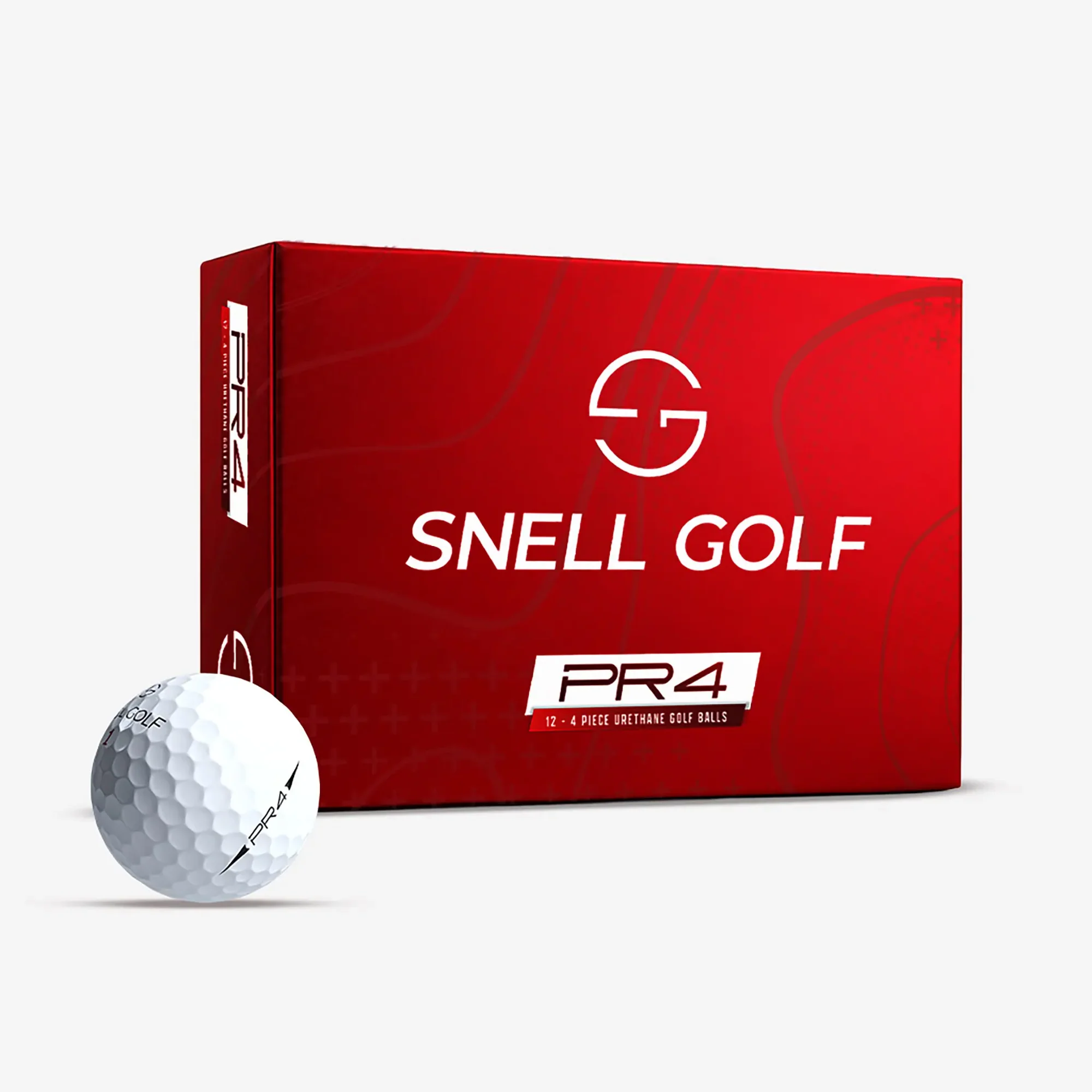
PR4 vs PR3 — which Snell ball is this? The PR3 (compression 65) is Snell's soft option, suited to 65–90 mph players who prioritize feel. The PR4 (compression 80) is Snell's firm-side tour ball — the one that directly competes with the Pro V1, Chrome Soft, and Srixon Z-Star. If you're in the 85–105 mph range and want a Pro V1 alternative, you want the PR4, not the PR3.
Specs at a Glance
| Spec | Snell PR4 | Titleist Pro V1 |
|---|---|---|
| Construction | 3-piece | 3-piece |
| Cover | Cast Urethane | Urethane Elastomer |
| Core | Dual-Layer Core | ZG Process Dual Core |
| Compression | ~80 | ~90 |
| Feel | Soft-Medium | Soft-Medium |
| Driver Launch | Mid | Mid |
| Driver Spin | Low-Mid | Low-Mid |
| Wedge Spin | Very High | Very High |
| Swing Speed Range | 85–105 mph | 85–105+ mph |
| Price (2026) | ~$37/dozen (direct) | ~$54/dozen |
Head to Head
Feel
Edge: Tie — feel profile is nearly identical in practiceSnell PR4
At compression 80, the PR4 sits between the soft PR3 (compression 65) and the firm Pro V1 (compression 90). Off the putter it has a satisfying, responsive feel — not mushy, not hard. On iron and wedge shots the cast urethane cover communicates contact clearly. Golfers who find the Pro V1 slightly too firm often land on the PR4 as their preferred feel profile. It is the closest thing in the Snell lineup to the classic, medium-firm tour ball sensation.
Titleist Pro V1
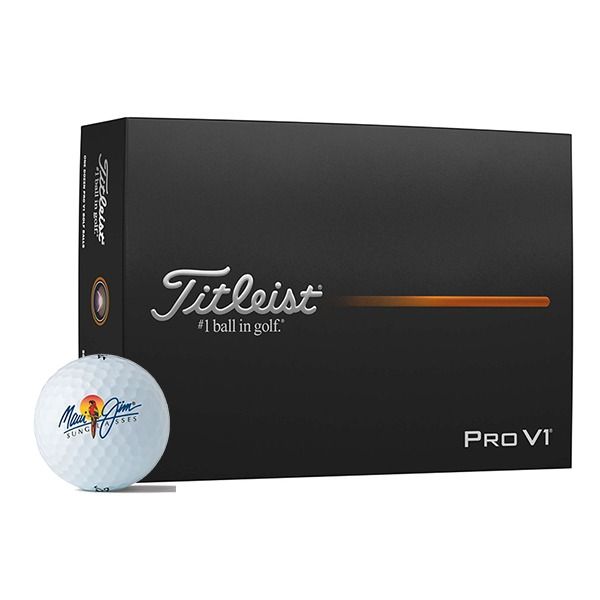
The Pro V1 at compression 90 is a touch firmer than the PR4, but still soft by the standards of tour balls. The character of the Pro V1's feel is precise — it tells you exactly where you made contact on every shot. On chip shots and pitch shots, the urethane elastomer cover has a distinct responsiveness that skilled players rely on for short-game feedback. The firmness gap between these two balls is noticeable but not dramatic.
Distance Off the Driver
Edge: Pro V1 (wind, 100+ mph) · Tie (85–100 mph calm)Snell PR4
The PR4's compression 80 core compresses efficiently in the 85–100 mph range and produces a mid launch with low-to-mid spin — the same flight window as the Pro V1. In independent testing the two balls are within 2–4 yards of each other in carry for most swing speeds. The PR4 does not give up meaningful distance to the Pro V1. This is not a ball where the cheaper option sacrifices yards.
Titleist Pro V1
The Pro V1 produces a low, penetrating ball flight that holds up in wind and plays consistently across conditions. Its ZG Process Dual Core provides excellent energy return, particularly above 95 mph where the firmer compression rewards faster swingers. The Pro V1's distance advantage over the PR4 is most visible in wind and above 100 mph. In calm conditions at 85–100 mph, the two balls are effectively tied on distance.
Short Game and Greenside Spin
Edge: Pro V1 (full wedge) · Tie (chip and pitch)Snell PR4
The PR4's cast urethane cover generates very high greenside spin — competitive with the best tour balls on the market. On chips and pitches from close range it grips the face cleanly and produces reliable, repeatable stop. On full wedge shots from 100–130 yards the PR4 performs nearly identically to the Pro V1. For the vast majority of recreational golfers playing the PR4, short-game spin will not be a limiting factor. This is the category that most justifies its tour ball positioning.
Titleist Pro V1
The Pro V1's urethane elastomer cover is the gold standard for greenside spin. It produces slightly more spin than the PR4 on high-speed wedge shots — the kind of full-swing approach from 100–150 yards where aggressive spin creates a check on firm greens. On lower-speed chips and pitches the gap is negligible. If aggressive spin on full approach shots is your primary scoring tool, the Pro V1 has a genuine edge.
Wind Performance
Edge: Pro V1 (slight edge in strong wind)Snell PR4
The PR4's mid-launch, low-to-mid spin profile holds up well in wind — better than softer balls like the PR3 or Tour Response. In mild to moderate wind, the PR4 produces a predictable flight and comparable carry to the Pro V1. In strong crosswinds the slight launch difference between the two balls (PR4 runs marginally higher) can result in a touch more movement, but the gap is small enough that most golfers won't notice it in typical on-course conditions.
Titleist Pro V1
The Pro V1 has a slight trajectory advantage in wind. Its combination of compression 90 and the low, boring flight it produces means it drifts less in crosswinds and carries more predictably in varying conditions. For golfers who play exposed courses or regularly deal with wind, this is the category where the Pro V1 premium is most defensible. It is also why tour professionals who play in all conditions reach for it.
Value
Edge: PR4 — $17 per dozen, every orderSnell PR4
At $37 per dozen direct from Snell, the PR4 saves you $17 per dozen over the Pro V1. Play once a week and buy a dozen a month and that is $204 saved per year. Two dozen a month and the gap is $408 — a fitting session, a new wedge, or a bucket-list round. The direct-to-consumer model is the trade-off: you need to plan ahead and order online rather than grabbing a sleeve at the pro shop. For golfers who are organized about their ball supply, the PR4 is one of the clearest value plays in tour ball golf.
Titleist Pro V1
The Pro V1 at $54 per dozen carries a premium that reflects Titleist's R&D, tour validation, and the most refined urethane cover in the market. For the single-digit handicap player who plays competitively and can genuinely exploit the Pro V1's advantages on full wedge spin and trajectory, the price is defensible. For the 12–20 handicap golfer, the performance gap between the PR4 and Pro V1 will not show up on their card.
What Does $17 More Per Dozen Buy You?
The Pro V1 costs $54. The PR4 costs $37. Play once a week and buy a dozen a month and you save $204 per year choosing the PR4. That is a fitting session, a new wedge, or a solid round somewhere you've been putting off.
What the $17 premium buys: marginally sharper full-wedge spin on approach shots, a touch lower trajectory in strong wind, and the ability to buy a sleeve at any pro shop on the way to the first tee. Those are real advantages — they matter most below a 10 handicap and above 95 mph.
Per Dozen
$17 more
Per Month (1 dozen)
$204/year more
Per Month (2 dozen)
$408/year more
Our Verdict
The Snell PR4 is the most direct Pro V1 competitor in the direct-to-consumer ball market. It matches the Pro V1's compression class, construction type, and target swing speed almost exactly — and undercuts it by $17 a dozen.
The Pro V1 wins on full-wedge spin and wind trajectory. Both are real advantages for competitive players below a 10 handicap. For the 12–20 handicapper, those differences are smaller than their contact variation on a given day.
Where to Buy
Frequently Asked Questions
Is the Snell PR4 as good as the Titleist Pro V1?
For most golfers in the 85–105 mph range, yes — the PR4 is genuinely competitive. Both are 3-piece urethane tour balls with nearly identical compression profiles and target swing speeds. The Pro V1 has a slight advantage in full-wedge spin and low-trajectory wind performance, but for handicaps 10 and above those differences rarely show up in scores. The PR4 delivers roughly 90% of the Pro V1's performance at 70% of the price.
What compression is the Snell PR4?
The Snell PR4 has a compression of approximately 80 — meaningfully firmer than the PR3 at compression 65, and slightly softer than the Pro V1 at compression 90. It is designed for swing speeds between 85 and 105 mph. Golfers who found the PR3 too soft for their swing speed will find the PR4 a better fit, and golfers who find the Pro V1 slightly too firm often prefer the PR4.
What is the difference between the Snell PR3 and PR4?
The PR3 (compression 65) is Snell's softer ball for swing speeds of 65–90 mph. The PR4 (compression 80) is Snell's firm-side tour ball designed for 85–105 mph players. The PR4 launches lower, spins less off the driver, and produces more feedback at impact. If you're comparing either Snell ball to the Pro V1, the PR4 is the direct comparison — the PR3 competes more against the Tour Response and Chrome Soft.
Where can I buy the Snell PR4?
The Snell PR4 is available direct-to-consumer exclusively through Snell Golf's website at $37 per dozen. It is not stocked at golf retailers or pro shops. This is the main trade-off versus the Pro V1: you need to order ahead of time and wait for shipping. For golfers who plan their ball supply in advance, the savings are substantial.
Should I switch from Pro V1 to the Snell PR4?
If your handicap is 12 or above, yes — almost certainly. The PR4 delivers comparable urethane performance at $17 less per dozen. For a single-digit handicapper who relies on the Pro V1's full-wedge spin and low wind trajectory, the switch is a closer call. Try a sleeve of PR4s before committing to a full switch — most golfers who do don't go back to paying Pro V1 prices.