
- +You want Callaway's latest Tri-Force Face technology
- +You're buying new and want a full warranty period
- +You frequently miss the heel or toe and want maximum off-center ball speed
- +You don't own an Elyte and are choosing between the two
- +You want the driver that will stay current for the next 12–18 months
- +You already own one — don't upgrade, the gap is too narrow
- +You want a 2025 flagship driver at a $150–250 discount
- +You make consistent center contact and don't need the Tri-Force edge
- +You need broader shot-shape adjustability (13g weight range)
- +Budget matters more than having the latest model
One generation, one new face: The biggest change from the Elyte to the Quantum Max is the Tri-Force Face construction — three materials instead of one, flexing independently to protect ball speed across more of the face. Everything else (carbon chassis, OptiFit hosel, 460cc head size) carries over with refinements. If you loved the Elyte, the Quantum Max will feel immediately familiar.
Specs at a Glance
| Spec | Quantum Max | Elyte |
|---|---|---|
| Head Size | 460cc | 460cc |
| Face Tech | Tri-Force Face | Ai 10x Face |
| Face Materials | Titanium + Poly Mesh + Carbon | AI-optimized Titanium |
| Crown | 360° Carbon Chassis | 360° Carbon Chassis |
| Weight System | Adjustable Perimeter Weight | 13g Adjustable Weight |
| Launch | Mid-High | Mid-High |
| Spin | Mid | Mid |
| Hosel | OptiFit (8 configs) | OptiFit (8 configs) |
| Year | 2026 | 2025 |
| Price | $599 MSRP | ~$350–450 used |
Head to Head
Face Technology
Edge: Quantum Max (off-center ball speed)Quantum Max
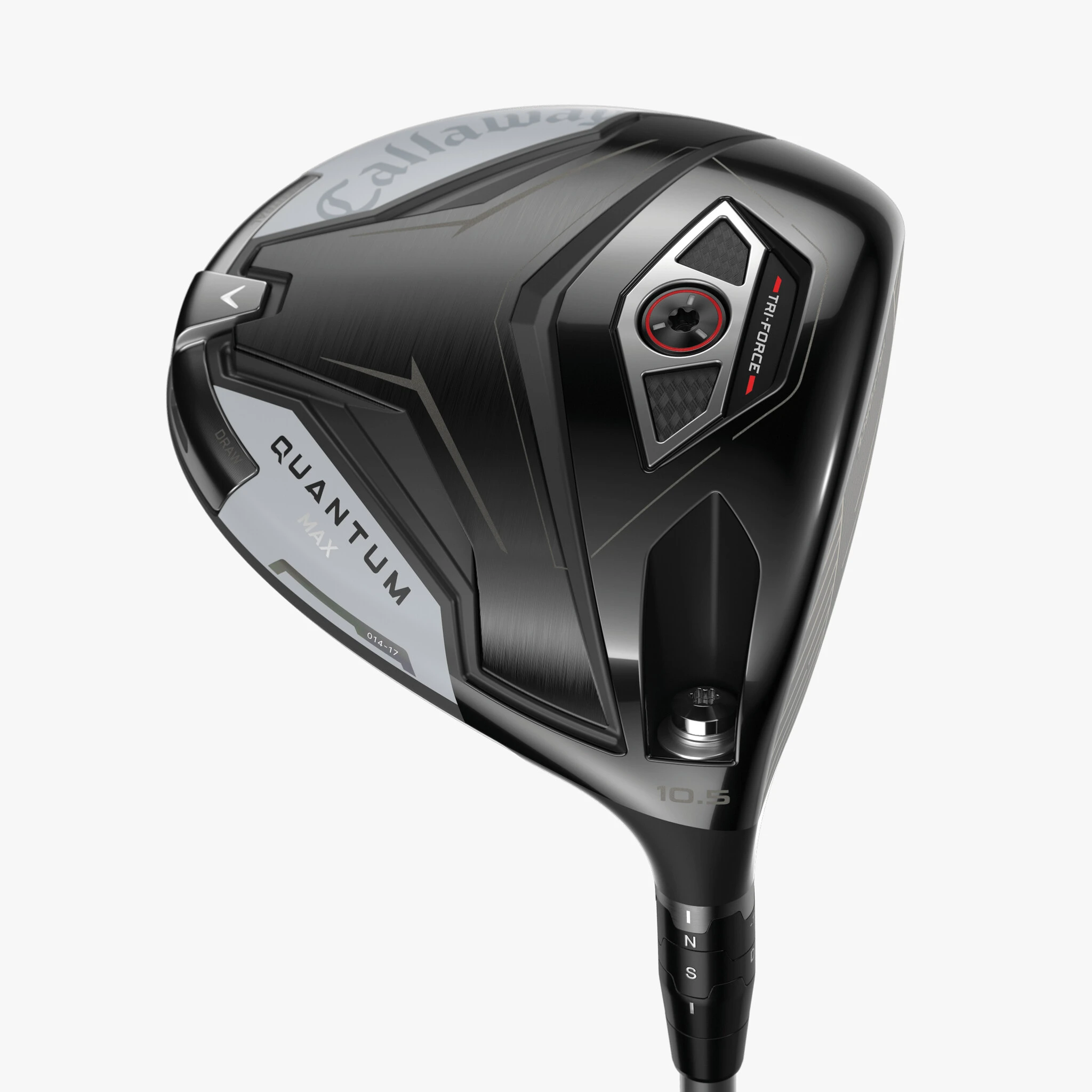
The Quantum Max introduces Callaway's Tri-Force Face — a three-material construction combining a titanium layer, a polymer mesh insert, and carbon fiber. The combination allows different zones of the face to flex independently, producing better energy return on off-center hits — particularly on toe and heel strikes where the single-material Elyte face lost more ball speed. This is the most substantive change between the two generations and the reason the Quantum Max earned its upgrade billing.
Elyte
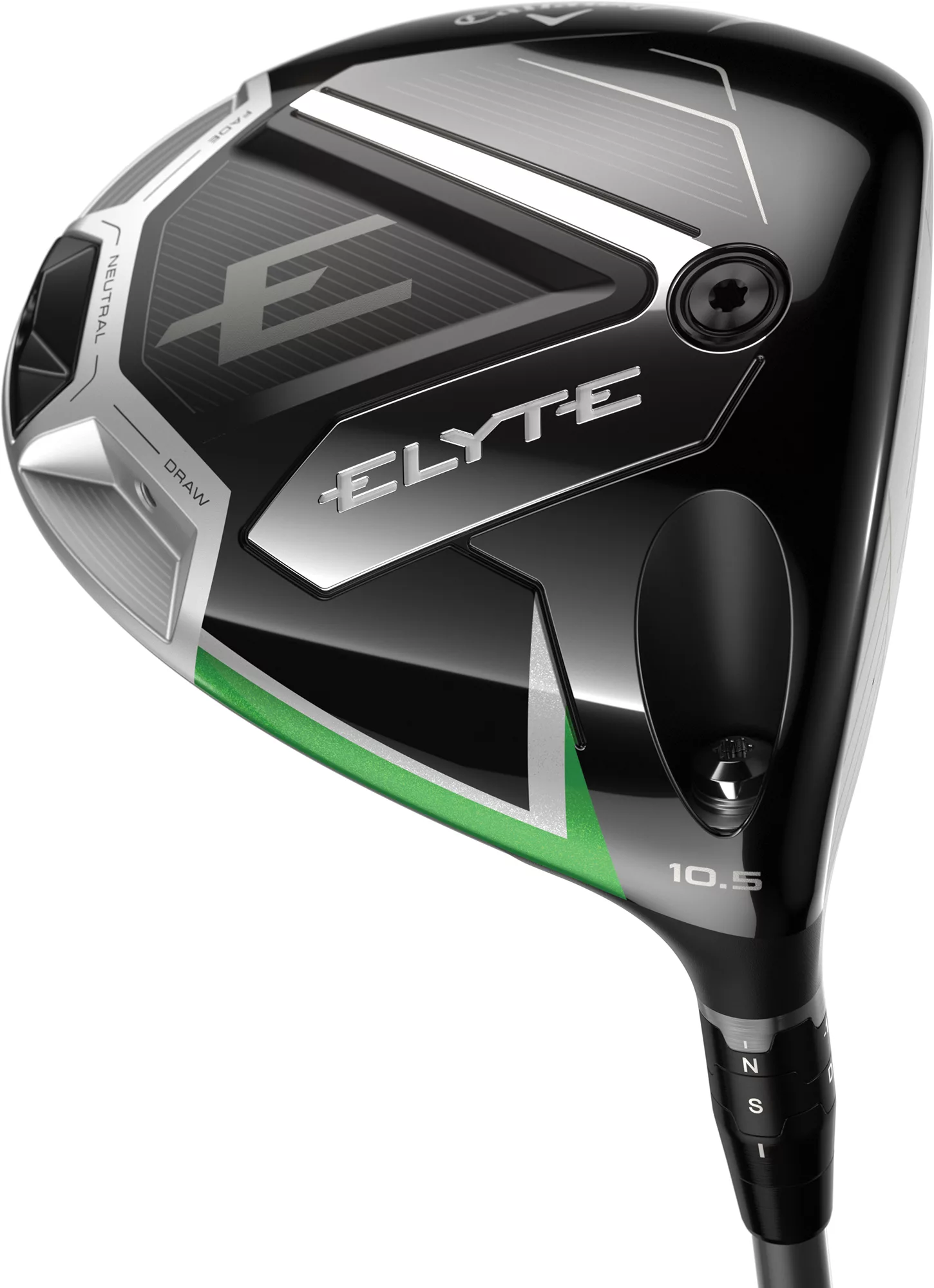
The Elyte's Ai 10x Face used 10 times more AI computation than the Paradym AI Smoke to optimize face thickness across every striking zone. At launch it was the most advanced face Callaway had produced, and it remains competitive in 2026. On center strikes the Elyte matches the Quantum Max almost identically. The difference shows up on the 15–20% of shots that catch the heel or toe — and even there, the gap is measured in a few mph of ball speed, not a club's worth.
Distance
Edge: Quantum Max (mishits) · Tie (center contact)Quantum Max
The Quantum Max's Tri-Force Face produces slightly better ball speed on off-center hits, which for recreational golfers who rarely find the center of the face consistently translates to a real, if modest, distance advantage. On dead-center strikes the two drivers are effectively identical. In launch monitor testing the Quantum Max shows a 1–3 mph ball speed gain over the Elyte on toe and heel strikes. On the course, that is a few extra yards on mishits — meaningful over 18 holes but not a transformation.
Elyte
The Elyte's Ai 10x Face was already producing some of the highest ball speeds Callaway had achieved at the time of launch. Testers consistently found it 6–8 yards longer than the Paradym AI Smoke it replaced. In 2026 it still holds its own against all but the very best current-generation faces. For a golfer who makes consistent center contact, the Elyte's distance performance is essentially indistinguishable from the Quantum Max in real on-course conditions.
Adjustability and Shot Shape
Edge: Elyte (shot shape range) · Quantum Max (MOI in neutral)Quantum Max
The Quantum Max uses Callaway's Adjustable Perimeter Weighting system — a weight positioned at the perimeter of the sole that can be moved between neutral and draw settings. Combined with the OptiFit hosel (8 loft and lie configurations), it gives you meaningful control over both face angle and launch. The perimeter weight position produces a slightly higher MOI effect compared to the Elyte's centrally positioned weight, adding a touch more forgiveness in neutral position.
Elyte
The Elyte's 13g adjustable weight sits on the sole and moves between draw and fade positions, giving you more shot-shape range than the Quantum Max's two-position perimeter system. If you need to correct a significant fade or occasionally play a deliberate draw, the Elyte's weight range is broader. Both use the same OptiFit hosel with 8 loft/lie settings. For most golfers the adjustability difference is minor — neither driver limits you meaningfully.
Sound and Feel
Edge: TieQuantum Max
The Quantum Max has a crisp, mid-frequency impact sound produced by the Tri-Force Face's composite construction. The carbon chassis absorbs vibration well and the overall feel at impact is solid and satisfying — not harsh, not overly muted. Callaway has refined the acoustic character of this generation slightly from the Elyte, with a touch less click on off-center hits. Most golfers will find the two drivers sonically similar.
Elyte
The Elyte has a well-tuned impact sound — slightly firmer-feeling than the Quantum Max on off-center hits due to the single-material titanium face. On center strikes the sound and feel profiles are nearly identical. Golfers who found previous Callaway drivers too loud or too quiet will find the Elyte and Quantum Max land in the same comfortable middle ground. Feel alone is not a reason to choose one over the other.
Value
Edge: Elyte (used price) · Quantum Max (buying new)Quantum Max
At $599 MSRP, the Quantum Max is priced the same as the Elyte was at launch. You get the latest Tri-Force Face technology, a full warranty period, and a driver that will be current for the next 12–18 months before the next generation arrives. If you are buying new and have no reason to choose the Elyte, the Quantum Max is the correct choice. The question only becomes interesting when the Elyte's used pricing enters the comparison.
Elyte
The Elyte is now available used at approximately $350–450, making it one of the best driver values in the current market. A used Elyte at $400 versus a new Quantum Max at $599 is a $200 gap for a performance difference that shows up most clearly on off-center hits. For a golfer whose misses are not frequent or severe enough to feel that ball speed difference, the Elyte is the smarter buy. For a golfer who wants the latest technology and a new warranty, the Quantum Max justifies itself.
The Price Gap in Plain Numbers
The Quantum Max retails at $599. A used Elyte in good condition runs $350–450 on the secondary market. That is $150–250 for a face construction upgrade that produces 1–3 mph better ball speed on off-center hits. For most recreational golfers, the Elyte used is the correct answer.
Quantum Max (new)
$599
2026 MSRP
Elyte (used)
$350–450
2025 model, used market
Price difference
$150–250
For one generation gap
Our Verdict
Already gaming an Elyte? Do not upgrade. The Quantum Max's performance advantage is narrow — better off-center ball speed and a touch more forgiveness in the neutral weight position. Those improvements will not change your scores if your Elyte is fitted correctly and performing well.
Buying a driver now and deciding between the two? The Elyte used at $350–450 is the smarter buy for most handicaps. The Quantum Max at $599 is justified if you frequently miss the heel or toe and want maximum face coverage, or if owning the latest generation matters to you.
Where to Buy
Frequently Asked Questions
Is the Callaway Quantum Max better than the Elyte?
Yes — the Quantum Max is a genuine step forward, mainly in off-center ball speed thanks to the Tri-Force Face's three-material construction. But the gap is narrower than a full generation jump implies. The Elyte's Ai 10x Face was already one of Callaway's best. On center strikes the two drivers are effectively tied. The Quantum Max's advantage appears most clearly on frequent heel and toe mishits.
Should I upgrade from the Callaway Elyte to the Quantum Max?
For most golfers, no. If your Elyte is fitted correctly and performing well, the Quantum Max won't produce a meaningful scoring improvement. The performance delta is real but narrow — most recreational golfers won't detect it on the course. Save the upgrade budget for a shaft fitting, a lesson, or a different part of your bag.
What is the Tri-Force Face on the Callaway Quantum Max?
The Tri-Force Face is Callaway's new 2026 face construction — three materials (titanium, polymer mesh, and carbon fiber) that flex independently to deliver better ball speed across more of the face. It is a structural advance over the Elyte's single-material Ai 10x titanium face, producing measurably better energy return on off-center hits.
What is the Callaway Elyte worth used in 2026?
The Elyte, which launched at $599 in 2025, is now available used at approximately $350–450 depending on shaft and condition. It is one of the best driver values in the current market — still competitive with 2026 drivers in everything except off-center ball speed, and $150–250 cheaper than the Quantum Max.
How does the Callaway Quantum Max compare to the Ping G440 K and TaylorMade Qi4D?
All three are 2026 flagship drivers at approximately $599. The Quantum Max leads on off-center ball speed with the Tri-Force Face. The Ping G440 K leads on raw MOI (10,000+) with its 32g adjustable sole weight. The TaylorMade Qi4D leads on driver spin control with the 60x Carbon Twist Face. All three are excellent — a proper fitting will tell you which head shape and shaft combination suits your swing best.